Eloping in the Dolomites: A Practical Guide to Your Mountain Celebration
If you are drawn to the Dolomites, I would love to know what caught your attention. The shape of the peaks? The idea of walking somewhere together before reading your vows? A few days away with the people closest to you? That is where I would begin planning your elopement, before choosing a famous viewpoint.
I live in Upper Austria and have photographed two shoots in the Dolomites. This guide brings that connection together with official regional information to help you ask useful questions, compare different settings and plan a celebration you can actually enjoy. The Dolomites are in Italy, so access arrangements and ceremony requirements need their own research rather than assumptions carried over from Austria.
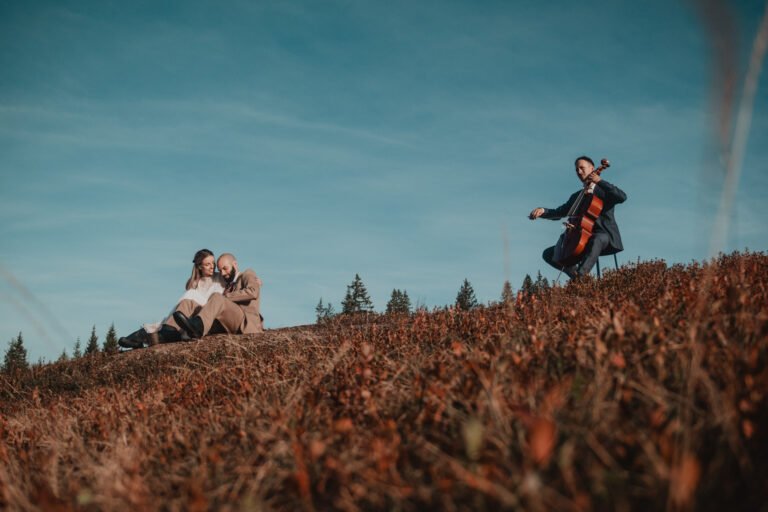
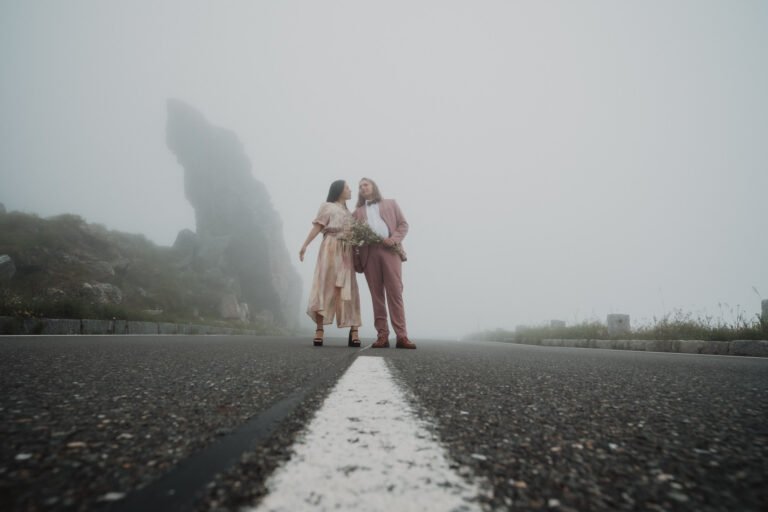
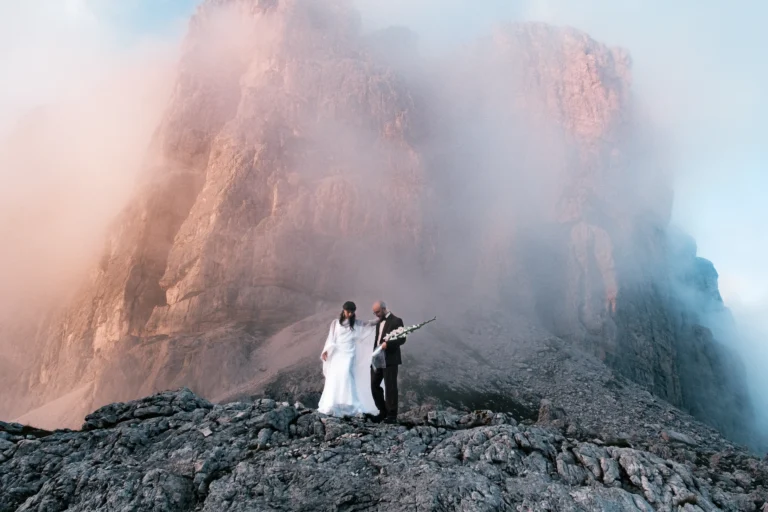
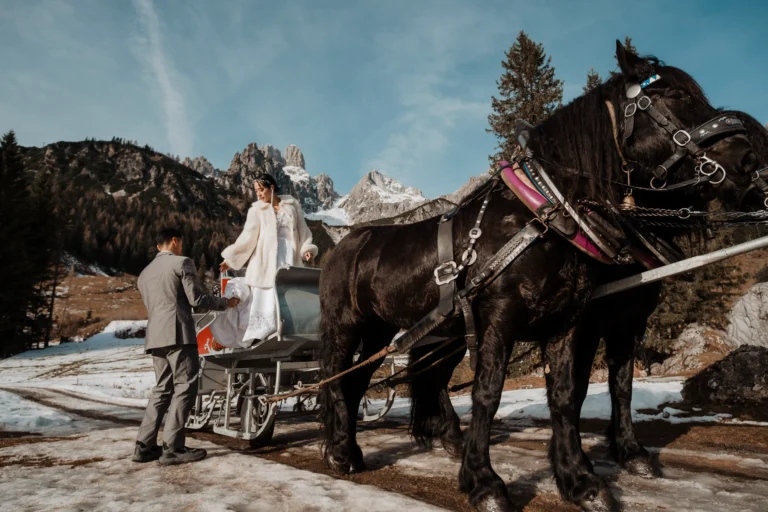
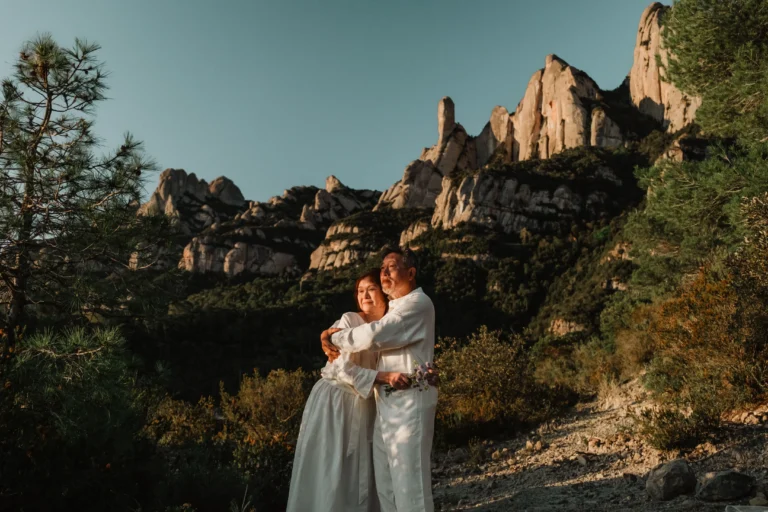
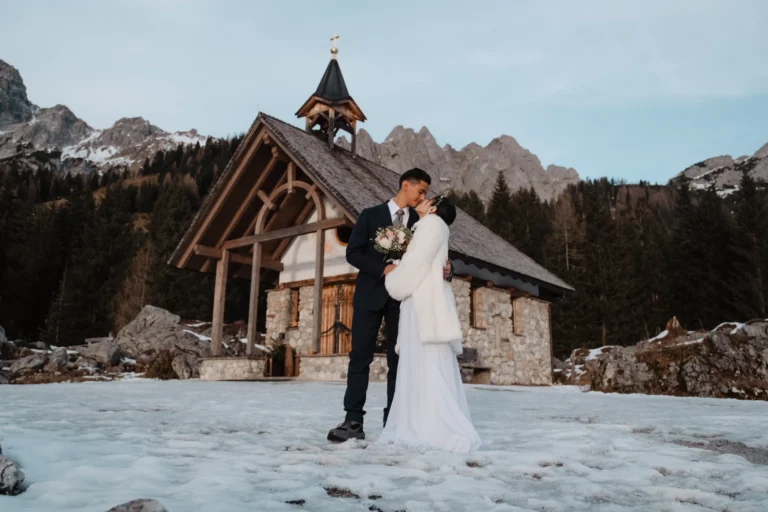
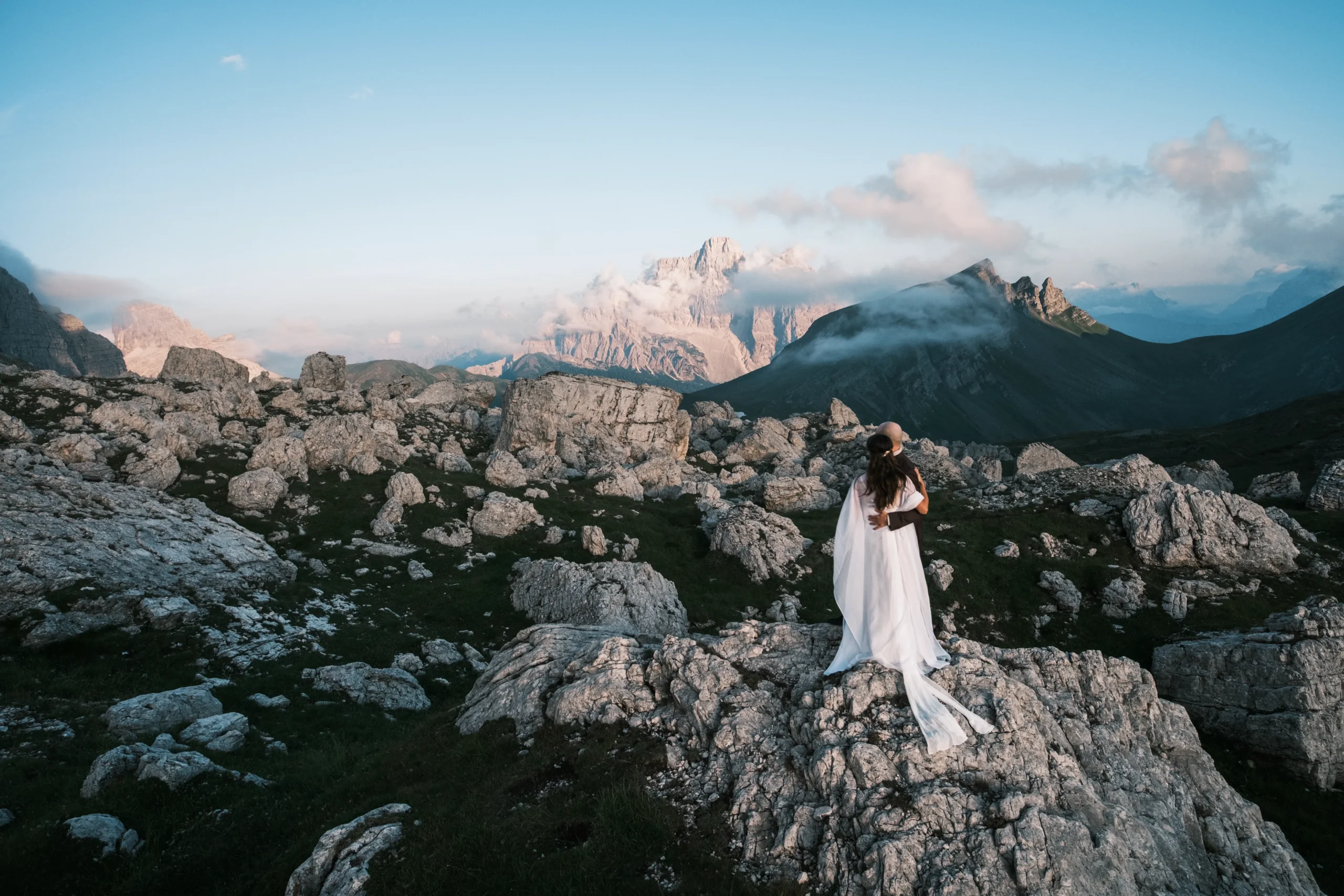
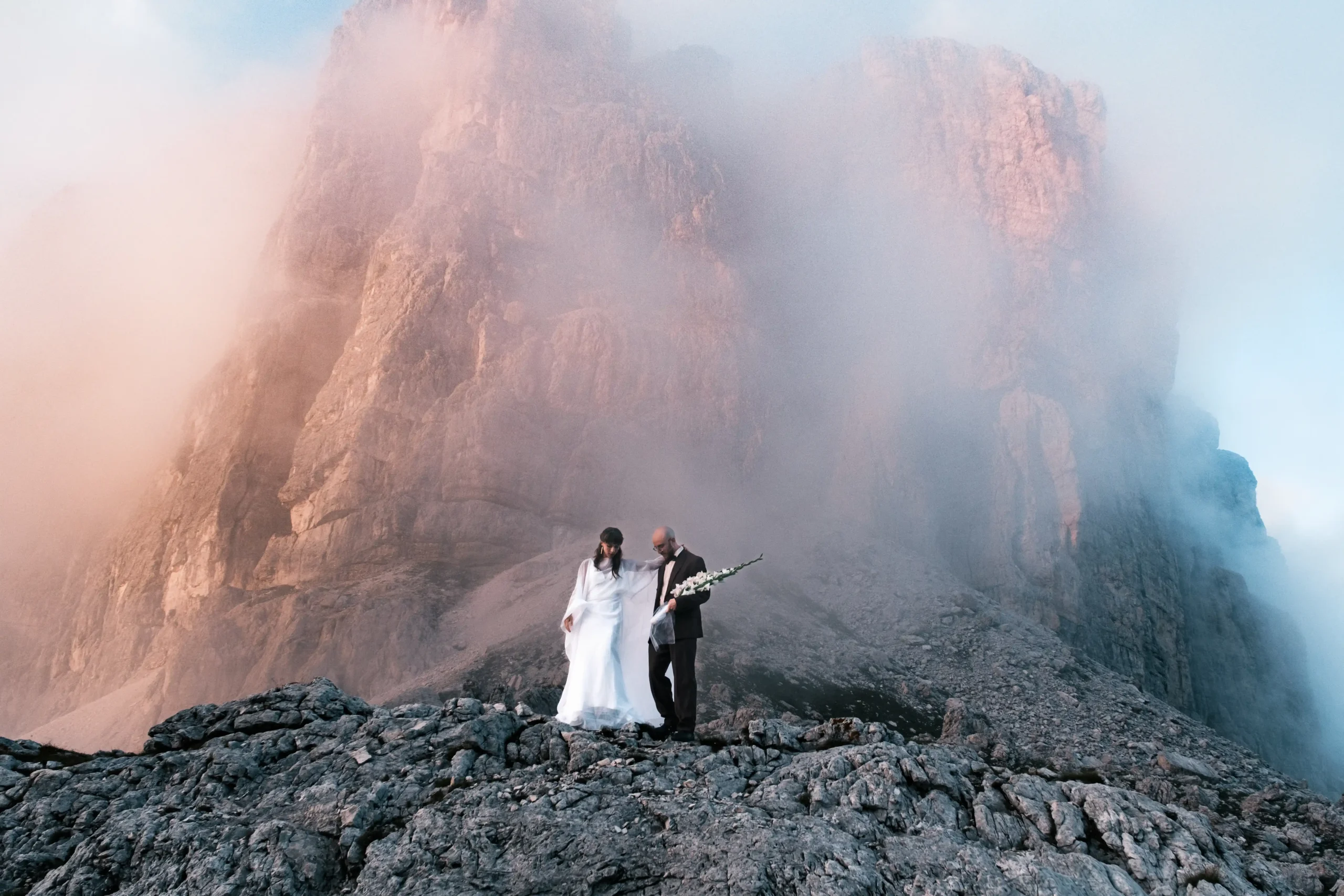
The photographs throughout this article are from my existing collection and illustrate my approach. They are not a location map or a claim that every image was made at the places discussed.
First, understand the region you are choosing
The Dolomites are a broad mountain region, not a single destination you can cover in an afternoon. The Dolomites UNESCO Foundation describes nine separate mountain systems, divided by valleys and other terrain. The protected property spans several Italian provinces. Names you save together on an inspiration board may belong to quite different areas.
Start by putting your favourite places on a map, then look at the roads and practical journeys between them. Straight-line distance is not a useful wedding timeline. A morning spent driving between distant locations leaves less time for walking, eating, being with your guests and making photographs without rushing.
You will also come across different names for the same place, including Italian and German names. Lago di Braies and Pragser Wildsee refer to the same lake; Alpe di Siusi and Seiser Alm refer to the same plateau. Save both names with your accommodation details and meeting points so everyone knows where the plan leads.
Choose how you want to spend the day
Before deciding on a location, each of you can name a few things you would genuinely look forward to. You might want a substantial hike, or you might want a comfortable base, a shorter walk and dinner together. Neither needs defending. The most useful plan is one that fits your energy and the people joining you.
Think about how much time you want to spend moving through a place compared with staying in it. If reading your vows privately is central, we need to consider the actual setting and other visitors. If family time is the priority, guest transport, seating and shelter may matter more than finding the biggest view.
I would rather help you choose one area with room to enjoy it than squeeze several impressive names into a schedule. You can use the rest of the trip for exploring. Your wedding day does not need to carry every experience you have ever wanted from the Dolomites.
Four kinds of setting to explore
A lakeside setting can give you a strong sense of place without making a long mountain hike the focus. Still, check the actual path rather than assuming that a shoreline is flat or accessible. Steps, narrow sections, roots and the distance from transport can change whether the route works for your group.
Open meadows and plateaus offer another direction. If you like the idea of walking with a wide mountain backdrop, look at the authorised paths, the journey from the lift or parking area and where you can stop without blocking the route. Agricultural land and protected habitats are part of a living landscape, not spare space for a ceremony setup.
A lift-accessed mountain area may reduce the climb, but the onward walk still needs checking. The last descent affects the day as much as the first ascent. A photograph taken after the lift closes does not tell you how the photographer and couple arranged their return.
A valley base with a shorter outing can work well when you want guests involved or prefer fewer transfers. You can spend time outside and return to a comfortable place for a meal. Before committing, ask the accommodation or venue what it can actually host; staying there does not automatically include permission for a ceremony or gathering.
Val Gardena and Seceda: plan the route after the lift
Val Gardena is one area to research if lift access is part of your idea. Use the official lift information for dates and operating times, then investigate the particular walk you have in mind. A ticket to the top and a suitable route for your celebration are two separate decisions.
The region’s Seceda seasonal guidance recommends realistic planning, checking local weather and considering your ability. It also notes that huts may be closed outside the main season. Carry what you need rather than making food, shelter or transport depend on an assumption.
If a ridge photograph is the image that brought you here, talk about how the location feels to stand in, not just how it looks. Exposure, wind and footing can matter even on a relatively short outing. We can discuss a different perspective if either of you is uncomfortable; you do not need to prove anything to the camera.
Alpe di Siusi / Seiser Alm: access comes before timing
For a plateau setting, research Seiser Alm’s official access rules early. The access road is subject to restrictions, with arrangements that vary by season and visitor circumstances. Read the rules for your dates, including parking reservations and any accommodation-related permissions, rather than relying on a general suggestion to drive up early.
Work backwards from the way you will leave. If you intend to use a cable car or bus, its operating hours need to fit your plans. If you have a vehicle permit, understand exactly what it allows. An attractive evening photograph is not worth finding out afterwards that the transport plan no longer works.
For the celebration itself, keep the footprint modest. A walk and time together may fit your wishes better than carrying furniture or decorations into the landscape. Ask the relevant operator or landowner about anything beyond ordinary access, including arrangements for professional photography and a ceremony.
Lago di Braies / Pragser Wildsee: check the current system
The official Braies visitor portal publishes seasonal traffic, parking and bus arrangements. For summer 2026 it used regulated access periods and advance booking requirements; the portal says 2027 details will follow in spring 2027. Treat the published system for your own travel dates as the reference, rather than copying last year’s timetable.
A transport reservation does not reserve a private part of the lake. If this is the place you love, be comfortable with the possibility of other visitors and consider which parts of the celebration need privacy. We can discuss keeping a personal exchange of letters elsewhere and using the lake for a walk and photographs.
If you want a boat experience, check the rental operator’s current arrangements separately. Do not assume a particular boat, time or exclusive setting comes with ordinary visitor access. Decide what would still make the day worthwhile if the activity cannot go ahead.
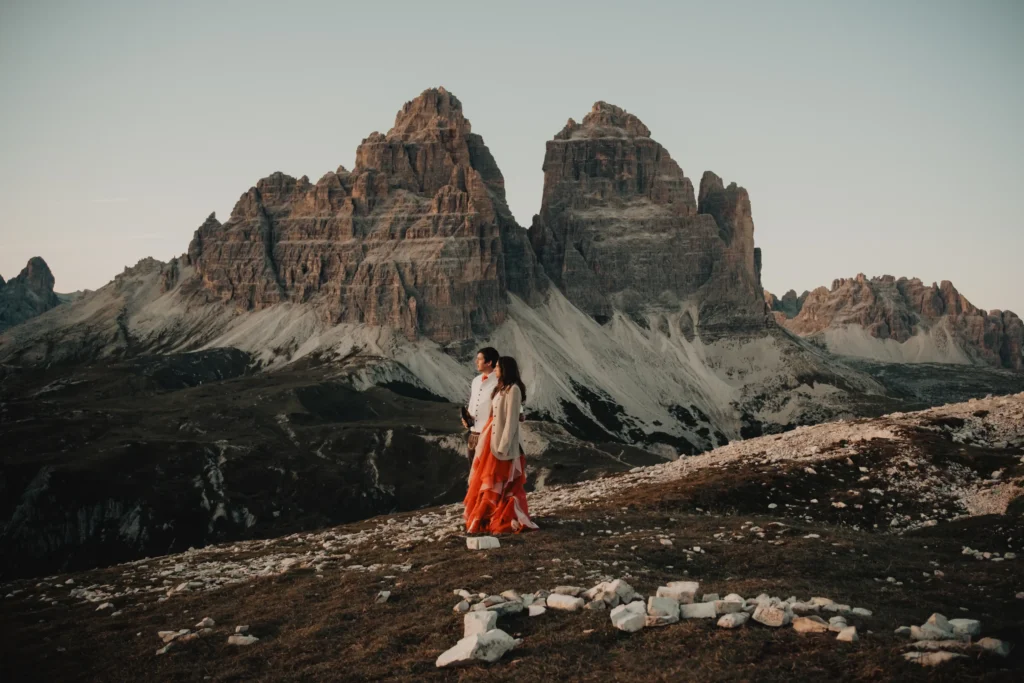
Tre Cime / Drei Zinnen: give a mountain outing enough time
Tre Cime is another area where access and the walk need planning together. The official shuttle portal explains the service to Rifugio Auronzo and its booking arrangements. Check the relevant season and reserve the return as required. Road, parking and shuttle access should be confirmed through the responsible operators.
Do not treat arrival at a car park or hut as arrival at every viewpoint you have seen online. Look at the full walking route, elevation, surfaces and the way back. Add time for breaks, clothing, photographs and the things you want to experience together, rather than using an ordinary hiking estimate as the whole wedding schedule.
For a demanding route, speak with an appropriately qualified local guide about the terrain and conditions. My role in shaping the photography or film does not replace technical mountain guidance. If the walk would take over a day you wanted to spend more slowly, choose a different setting.
Choose a season with the practical details beside it
Start with what matters most to you: walking, a particular kind of landscape, time with guests, or a broader trip around the celebration. Then compare dates against the actual services and routes you need. A season is a useful starting point, but it is not a guarantee that a high path, lift or hut will be available.
For a warmer-season plan, check lift calendars and local route conditions before booking around a specific view. For an autumn visit, look carefully at the closing dates of the services your plan depends on. For a snowy experience, make a winter plan with suitable access and expertise rather than adapting a summer route from photographs.
I would also think about how you want to feel during the day. Are you happy taking breaks to warm up? Do you enjoy walking in practical layers? Would a shorter outing and a comfortable meal make the experience more enjoyable? Those are useful planning choices, not compromises in how meaningful the celebration can be.
Crowds, light and privacy need to be considered together
Early or late light might suit the photographs you imagine, but first check whether the timing suits the route and transport. A quieter hour is not a promise of an empty place. Popular viewpoints remain shared, and your plan needs to work without asking other visitors to disappear.
Choose the moments that need the most privacy. You might want your vows heard only by each other, while being happy to walk through a busier setting later. Separating those priorities gives us more options than insisting that every part of the day happen in one famous spot.
We can plan with the light in mind while leaving room for the weather we actually get. I pay attention to the way you interact and how the landscape surrounds you, not only whether a particular sunset appears. It helps to bring references for the feeling you love rather than one photograph the day must reproduce.
Build an alternative you would genuinely enjoy
A useful alternative is specific enough to use. Identify another setting, check the journey and access, and speak to the people involved about what can change. If you want indoor space, confirm it with the venue rather than assuming a nearby café can host your celebration.
Keep the things that matter most in both versions. If that is reading your vows, sharing a meal and spending time outside, you can explore more than one way to do them. It is easier to make a calm decision when changing the setting does not feel like losing the whole day.
Agree how decisions will be made and who checks the relevant conditions. Current local advice, forecasts and operator updates belong in that conversation. Do not let a paid booking or a much-loved photograph become a reason to continue somewhere unsuitable.
Legal marriage or a symbolic ceremony?
Decide early whether you want a legally recognised marriage in Italy or a symbolic celebration with the legal arrangements handled separately. These lead to different planning questions. Contact the civil-status office of the Italian municipality where you intend to marry and the appropriate consular authorities about your circumstances. Italy’s official marriage guidance is a starting point, not a personalised document checklist.
Ask about eligibility, documents, translations, deadlines, witnesses, language support and the permitted ceremony location. The requirements can depend on your nationalities and residence. Confirm any recognition steps where you live as well. Do this before paying for arrangements that depend on a particular legal ceremony.
For a symbolic celebration, you still need to check permission to use the place as intended. A personal exchange of vows does not make every meadow, terrace or protected area available for an event. Keep the administrative decisions clear so the day itself can be about the two of you.
Bring your people into the plan
If family or friends are joining you, ask about their actual needs before choosing the route. Walking distance alone is not enough: steps, surfaces, standing time, toilets and shelter can all affect comfort. Check specific access requirements with the operator rather than relying on the word ‘easy’.
You can split the day between a shared celebration and time as a couple. For example, an accessible gathering and meal could sit alongside a separate walk for photographs. This is a planning possibility, not a fixed itinerary. The timing needs to suit the people and setting you choose.
With children, make room for food, rest and changes of pace. Give guests clear meeting points and explain which parts are optional. Someone should understand the return arrangements without having to ask you to organise everyone while you are enjoying the day.
Photographs, film and music: choose what you want to remember
Think about how you want to return to the experience. Photographs hold gestures, expressions and the relationship between you and the landscape. Film gives movement and timing another role in the story. I personally offer either photography or filmmaking for a celebration, never both at once, so we can talk about which feels right for you.
My background in dance, choreography and filmmaking shapes how I see you together. You do not need to perform or know how to pose. I can offer direction and then respond to what happens between you, while keeping the experience itself at the centre.
If music matters to you, tell me what you have in mind. A live performance needs its own practical discussion about the performer, travel, instruments, timing and permission at the setting. My Austrian musician network is a starting point for that conversation, not a promise that every arrangement is possible in every Dolomites location.
Respect the place you have come to enjoy
Check the rules of the specific park or site. South Tyrol’s nature-park code of conduct, for example, prohibits recreational drone use in its parks. Do not assume that booking a photographer or filmmaker creates permission to fly. Other locations require their own checks.
Keep paths clear and stay within permitted access. Avoid scattering confetti, leaving flowers or bringing decorations that could affect the surroundings. Ask about sound before arranging music. The places that make these celebrations appealing are also habitats, working landscapes and somewhere other people have come to enjoy.
Plan how you will carry everything back out, including food packaging and spare clothing. A celebration can feel generous and personal without leaving anything behind. I would rather put attention into the time you spend together than add objects the place does not need.
A realistic outline for your first planning conversation
Bring a season or a few possible dates, the number of people joining you and the kind of walking you enjoy. Share the places that attracted you, but also explain why. A lake may stand for calm, a ridge for adventure, or a village base for time with family. Understanding that gives us more room to find a suitable plan.
Include the practical boundaries: the time you have for the trip, anything that would make you uncomfortable and the budget you want the whole experience to fit. Accommodation, transport, meals, activity providers and any ceremony arrangements sit alongside photography or film. Ask for clear written offers so you can compare what is included.
You do not need to arrive with a finished itinerary. I’d love to hear what makes the Dolomites exciting to you and help explore a direction for your photography or film experience. From there, we can identify the local information, permissions and specialist support the plan needs.
Explore my elopement photography packages or standalone wedding films, then tell me about your Dolomites plans. If you are still comparing destinations, the Austria location guides offer another starting point close to my home.